LUNG CHIN, LONG JIN OR DRAGON WELL
“GREEEN TEA”
Ooops!!! this is quite a catchy ancient Chinese proverb- read this:
"Better to be deprived of food for three days,
than tea for one."
On Drinking Tea Alone...(Chinese
saying)
"In my own hands I hold a bowl of
tea; I see all
of nature represented in its green
color.
Closing my eyes I find green mountains and pure water
within my own
heart.
Silently sitting alone and drinking tea,
I feel these become part of
me."
I am prompted to blog on green tea again- inspired, after knowing that my blogger friend, Lee, cosumes six glasses of green tea daily, consistently, for more than twenty years now.
Name: Long Jing Tea or Lung Ching Tea or Dragon Well
Tea (Chinese Green Tea)
Origin : Hangzhou, Zhejiang Province
China
Longjing is one of China's top 10 teas and is considered the best by
those devoted to green tea.
Brand: There are many brands of Dragon well tea in
the market.
ABOUT LONG JING TEA (DRAGON WELL TEA)
This tea doesn't store very well (green teas are best drunk fresh). Green
teas can be stored for 1 year in a dry, air- and light-tight container.
Suggested Usage: Use between one and two teaspoons
of leaves per cup of 75-85 degree water (167-185F) for up to 3-5 minutes.
The flat and smooth tea leaves (resembling pine needles with a pale green
color) brew a tea with light green color, a subtle fragrant scent, and a
refreshing taste.
It is one of China's most celebrated green teas.
INTERESTING HISTORICAL
EVENTS
Tea was accidentally
discovered by Emperor Shen Nung (aka the Shennong, Yan Emperor or "Emperor
of the five grains") over 5,000 years ago,
when it was found to be an
antidote against the poisonous effects of some herbal medicines.
The tea has a long history; more than 1000 years.
It's earliest record may
be found in the book named chajing, the first book on tea in the world, written
by the Chinese expert of the Tang Dynasty (618-907), Lu Yu.
Knowledge of the tea began to spread and became known all over the
country by the times of the Yuan and Ming Dynasties.
Especially in the Qing Dynasty, Longjing tea became very
popular.
One of the most remarkable emperors of the Qing Dynasty, Qianlong, paid
four visits to the growing area of Longjing tea, not only to enjoy sipping tea,
and to write and sing poems to praise the tea, but also to watch the process of
picking and roasting it with serious intent.
He was so interested in Longjing tea that he named
the eighteen tea trees in front of the Hugong Temple "royal tea".
The Chinese government has made a great effort to promote it and
introduce advanced technology in planting, picking and roasting of the tea with
high quality standards.
TEA CULTIVATION IN THE CLOUDS AND MIST
The name Longjing is from a small village in Hangzhou Zhengjiang Province. It is said
that residents in ancient times believed that a dragon dwelled there and
controlled the rainfall.
As a result, people went there, whenever there was a
drought to pray for rainfall, from as early as the Three Kingdoms Period
(221-280).
Longjing tea is grown in the Longjing mountain area
of Hangzhou, southwest of the West Lake.
The fertile land is both rich in phosphorus and
sub-acidic sand.
This region prevents the cold current from the north
and holds back the warm current from the south, thus the growing area of
Longjing tea can be coated by cloud and mist for long periods of time.
HARVESTING BY HAND
Grown in the mountainous regions of Lion's Peak of Hangzhou, Zheijiang
province.
Like other famous teas (notably Darjeeling), the notion of
"flush"
(time of picking)
i.e. spring, summer or autumn) applies to
this wonderful tea.
First flush Long Jing, which is picked once a year by hand when the
leaves and buds are at their smallest and most fragrant stage, is immediately
roasted and has a characteristic shape of leaves folded flat along their
length.
The right time for picking the tea leaves is very
short. The period between Qing Ming and Grain Rain (from April 5 to 21) each
year is generally considered the prime time to get the highest quality Longjing
tea.
This is a premium tea and highly prized as such in
China.
It is difficult to find in export as it's mostly
consumed by the local market and it isn't cheap.
Long Jing is very delicate and fresh tasting, has a nutty, slightly sweet
flavor and a lasting buttery finish.
HEALTH BENEFITS IN BRIEF
Longjing tea aids one's health in many ways
regardless of your age.
It is used to deter food poisoning, refresh the body,
stop cavities, fight viruses, control high blood pressure, lower the blood
sugar level, and to prevent certain cancers.
Hence, Longjing tea is regarded as
the elixir for health and is widely sold and accepted all over the world.
A more detailed health benefits list, strictly based on research, will be publish in my
future posting.
GREEN TEA BREWING
The brewing method we highly recommended is to put a
pinch of dry, roasted tea leaves into a porcelain or transparent glass cup and
pour hot water at about 85C into the cup.
Sip and enjoy!
TEA CULTURE
Longjng tea is famous both because of
its good quality, as well as its historical and cultural values.
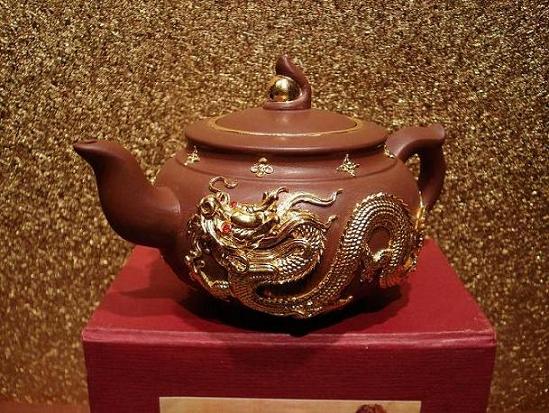
The chinese have their way on tea
ceremony.
When having visitors or entertaining
guests, make sure the spout of the teapot is not facing anyone. It is impolite
to set the teapot down where the spout is facing towards somebody.
The spout should always be directed to
where nobody is sitting, usually just outward from the table.
A LEGEND ONCE
TOLD- UNTIL TODAY
The Legend about the Shape of Dragon Well Tea
The present-day flat shape of Dragon Well Tea is said to have something
to do with Emperor Qianlong of the Qing Dynasty. Legend has it that on one of
his inspection tours to Hangzhou...
Emperor Qianlong disguised himself as an ordinary man and came to the
Hugong Temple at the foot of Shifeng Mountain near Dragon Well Village. An old
monk served him some Dragon Well Tea of the West Lake.
This is just a legend. The flat shape of Dragon Well tea is generally
believed to be influenced by Dafang tea of neighboring Anhui area in the late
Ming and early Qing Dynasty.




.jpg)


